
Building Climate Resilience and Sustainable Livelihoods-Empowering Farmers, Women, Youth, and PWDs to Thrive in a Changing Climate
Women, Youth, and PWDs to Thrive in a Changing Climate
Climate change is no longer a distant threat for rural communities in Ghana—it is a daily reality disrupting livelihoods, food systems, and economic stability. In the Atebubu-Amantin Municipality, where over 90% of smallholder farmers depend on rainfall, unpredictable weather patterns, prolonged droughts, and shifting seasons have led to crop failures, income losses, and deepening poverty.
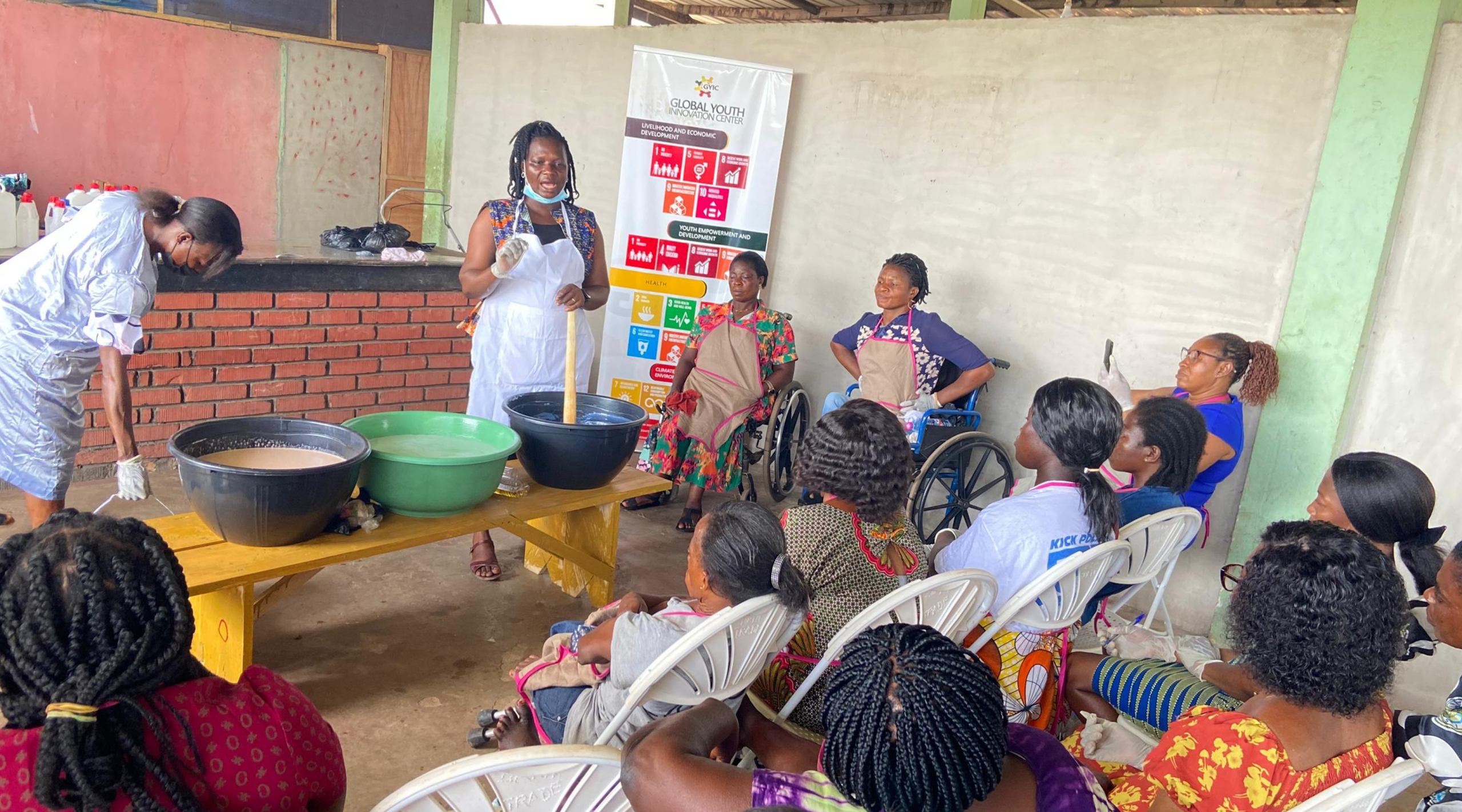
In response, the Global Youth Innovation Center (GYIC) and The Pollination Project Project Foundation implemented the Climate Defence for Local Farmers Project, a community-driven initiative designed to equip farmers, particularly women, youth, smallholder farmers, and persons with disabilities (PWDs), with the knowledge, tools, and systems needed to adapt, recover, and build long-term resilience.
Sustainable Outcomes and Impact
1. Increased Climate Resilience and Adaptive Capacity
smallholder farmers trained in climate-smart agriculture and climate change adaptation practices within 1 year
of trained farmers adopted at least two climate-resilient farming practices, including adjusted planting cycles and soil conservation techniques This has strengthened farmers’ ability to anticipate, adapt to, and recover from climate shocks and vulnerability
2. Improved Agricultural Productivity and Food Security
of participating farmers reported improved yields following adoption of climate-smart practices
- Reduction in total crop losses during erratic rainfall seasons
- Increased use of climate-resilient seeds and improved farm planning strategies Farmers are now better positioned to produce consistently, secure food for their households, and generate income despite climate variability.
3. Enhanced Access to Climate Information and Early Warning Systems
- Establishment of digital weather information platforms (e.g. Mass Messaing, WhatsApp groups) delivering real-time updates
- Dissemination of localized weather forecasts in local languages, improving accessibility for rural farmers
of beneficiaries reported using weather information to guide planting decisions
This shift from guesswork to data-informed farming decisions has significantly reduced vulnerability.
4. Strengthened Livelihoods and Income Stability
of beneficiaries experienced improved income stability within one farming cycle
- Diversification of income sources through improved farming practices and planning
- Reduced dependency on emergency coping mechanisms such as asset sales or borrowing
Farmers are transitioning from climate-affected survival to more stable and predictable livelihoods.
5. Inclusion and Empowerment of Women, Youth, and PWDs
The project prioritized vulnerable groups, ensuring:
Active participation of women farmers and youth in climate training and leadership roles
Inclusion of persons with disabilities in knowledge-sharing platforms and farming activities
Strengthened confidence and decision-making power among marginalized groups this has fostered a more inclusive and equitable local agricultural system.
6. Environmental Sustainability and Ecosystem Protection
Adoption of eco-friendly farming practices that promote soil health and biodiversity
Increased awareness of sustainable land use and environmental conservation
Reduced harmful practices contributing to land degradation
The project is contributing to long-term environmental restoration and climate mitigation efforts.
Real Stories of Transformation
From Crop Loss to Climate-Smart Farming
A smallholder farmer in Murchuso recalls losing his entire maize farm due to drought:

Today, he uses climate information to guide his farming decisions, resulting in recovered yields and renewed confidence.
A Woman Farmer Takes the Lead
In Bachase, a woman farmer and mother of three became one of the trained community facilitators:

She has transitioned into a local climate advocate, influencing farming practices across her community.
Youth Driving Climate Innovation
A young farmer in Adeemra leveraged the training to experiment with improved farming techniques:
He now supports peers in adopting climate-smart practices – demonstrating how the youth can become drivers of sustainable agriculture.
Why This Matters
This initiative demonstrates that localized, knowledge-driven climate solutions can transform vulnerable farming systems. By combining:
Climate education
Real-time weather information
Community-led training models
Inclusive participation
GYIC is building a scalable model for climate resilience and sustainable livelihoods.
The project directly contributes to:


Sustainability and Long-Term Impact
Our approach ensures lasting impact through:
Farmer-led knowledge transfer systems (ToTs model)
Continuous use of digital climate information platforms
Strengthened community ownership and volunteerism
Integration of sustainable practices into everyday farming
This ensures that benefits extend far beyond the project lifecycle—creating self-sustaining, climate-resilient communities.
Sustainability and Long-Term Impact
Our approach ensures lasting impact through:
Farmer-led knowledge transfer systems (ToTs model)
Continuous use of digital climate information platforms
Strengthened community ownership and volunteerism
Integration of sustainable practices into everyday farming
This ensures that benefits extend far beyond the project lifecycle—creating self-sustaining, climate-resilient communities.
Looking Ahead
With continued support, GYIC aims to:
Scale climate-smart agriculture training to more communities
Continuous use of digital climate information platforms
Expand inclusion of women, youth, and PWDs in green livelihoods
Together, we can build a future where vulnerable farmers are not just surviving climate change but thriving despite it.
Donors

Our Commitment
We are building a movement where empowered youth and inclusive communities drive development from the ground up. At GYIC, we believe that sustainable change happens when people are not just included, but lead the process. Together, we are making difference, differently.